You just got home with a sealed eighth, a couple of pre-rolls, and maybe a cart you plan to stretch for a while. If you’ve ever opened that package a week later and found the flower drier, flatter, and harsher than it was at the dispensary, you already know the problem. How to keep pot fresh is really about controlling the small things that ruin quality after the sale, not about treating cannabis like it’s indestructible.
Fresh cannabis fails in predictable ways. Air pulls away aroma, light breaks down cannabinoids and terpenes, heat speeds decay, and moisture swings can leave flower either brittle or mold-prone. The good news is that the fix is simple once you match the storage method to the product and the amount you bought.
Table of Contents
- Why Your Cannabis Goes Stale Faster Than You Think
- Building the Ideal Cannabis Storage Setup
- What the Degradation Data Reveals About Shelf Life
- Freshness Rules by Product Type
- Handling Retail Packaging and Small Quantities
- Common Storage Mistakes and How to Avoid Them
Why Your Cannabis Goes Stale Faster Than You Think
The first sign is usually disappointing, not dramatic. A bud that smelled loud at the counter opens up at home and smells muted. It may crumble too easily, smoke hot, or feel rougher than it should, even though it looked fine when you left the store.
The four things that beat up fresh flower
Oxygen is the quietest problem. Every time a container sits half empty, or gets opened again and again, more air reaches the flower. That speeds oxidation, and over time THC and terpenes don’t stay stable.
Light is just as rough. Direct exposure, especially bright shelf or window light, accelerates quality loss. That’s why a clear jar on the counter is a convenience, not a storage plan.
Heat makes everything move faster. Independent storage guidance notes that a sealed glass jar kept around 60–70°F can keep flower fresh for 6–12 months Boveda’s storage guidance. Push the product into a warm room, a car, or a sunny spot, and the decline speeds up.
Practical rule: if it’s warm enough that you’d rather not leave chocolate there, it’s probably too warm for good flower storage too.
Humidity is a narrow target, not a vague preference
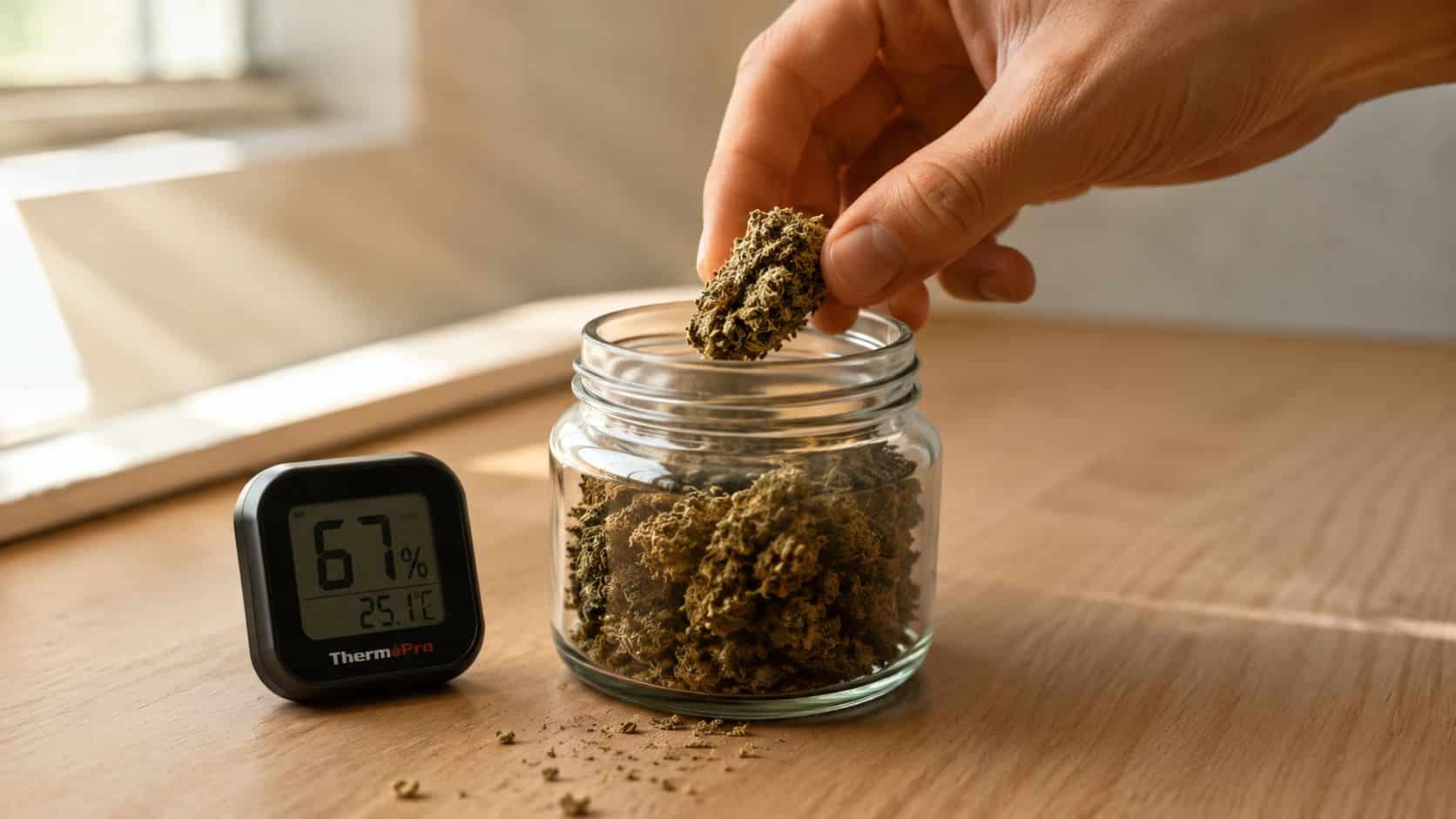
Flower needs balance. Too dry, and it gets brittle and loses volatile terpenes. Too wet, and you invite contamination and mold. A widely cited storage standard sits at 55–65% relative humidity, with 58–62% treated as the practical sweet spot for aroma, texture, and potency Boveda’s storage guidance.
That’s not just theory. NIH-summarized postharvest research identified curing cannabis at 18°C and 60% RH for 2 weeks as an effective condition, which is a strong reminder that controlled moisture and moderate temperature are foundational, not optional Boveda’s storage guidance. When people complain that “weed goes bad fast,” they’re usually describing a storage problem, not a product problem.
Freshness is about experience, not just smell
Freshness changes the smoke itself. Dry flower burns harsher and can feel thin on the palate because the volatile compounds have already leaked away. Over time, the product stops tasting like the strain you bought and starts tasting like storage.
That’s why bad habits matter so much. If you treat every package the same way, you end up with the same result, stale flower, no matter how good the starting material was.
Building the Ideal Cannabis Storage Setup
The best setup is boring in the right way. You want a dark, cool, sealed microclimate that doesn’t change much from day to day. For most buyers, that means a glass jar, a humidity pack, and a storage spot that doesn’t get warm or bright.
Start with the container, not the gadget
An airtight glass container beats a plastic bag for day-to-day storage. Glass doesn’t hold odors, doesn’t create the static mess that plastic can, and closes down air exchange much better than the pop-top or pouch most retail flower comes in. Use a jar that fits the amount you have, because less empty space means less oxygen hanging around the buds.
That matters more than fancy branding. A perfectly ordinary mason jar often works better than a premium-looking container that isn’t airtight. If you’re storing a small amount, use a smaller jar instead of putting a few buds in a big container full of air.
Add a two-way humidity pack and stop guessing
A two-way humidity pack helps hold the microclimate in the range you want. The practical target for cured flower is 58–62% RH, which keeps buds from drying out while staying below the moisture range that gets risky Boveda’s storage guidance. If you store flower longer, the same guidance often lands on 55–65% RH overall, with 58–62% being the day-to-day sweet spot.
Put the pack inside the jar, seal it tightly, and leave it alone. Humidity packs in this range are designed to self-regulate, but they aren’t forever. One expert source notes that depleted packs should be replaced every 2–3 months because they stop maintaining the target microclimate Weedmaps storage guidance.
Best practice: keep the jar sealed in a dark, cool cabinet instead of on an open shelf or beside anything that throws heat.
Temperature and placement do most of the work
Aim for roughly 60–70°F when you can, because that range keeps freshness intact far better than a hot room or sunny windowsill Boveda’s storage guidance. If the room runs warmer than that, the storage rules get stricter, not looser. Some guidance recommends lowering target humidity by 2–3% for every 5°F above 70°F to offset the higher temperature load Mood’s storage guidance.
The location matters too. A drawer near a radiator, a bathroom cabinet, or a kitchen shelf above appliances is a bad home for flower. Keep it dark, cool, and stable, and resist the urge to open the jar just to check it.
If you’re looking for a nearby dispensary with organized menus and pickup options, a local search like state-line dispensary near me can help you find a convenient source without overcomplicating the storage side.
What the Degradation Data Reveals About Shelf Life
The storage conversation gets clearer once you look at the numbers. Cannabis doesn’t stay at peak quality forever, even under room-temperature conditions that seem harmless at first. That’s why good storage is less about perfection and more about slowing the clock.

Potency loss is gradual, then obvious
One cited dataset reported about 16.6% THC loss after 1 year, 26.8% after 2 years, 34.5% after 3 years, and 41.4% after 4 years when cannabis was kept at room temperature Weedmaps storage guidance. That means the product can still look usable long after it has stopped performing like it did when it was fresh.
There’s also a faster early decline under less controlled conditions. Anresco Laboratories data on cannabis trimmings found an average 11.8% decline in total potential THC within the first 30 days Weedmaps storage guidance. That’s a strong reason to treat the first month after opening like a freshness window, not a free-for-all.
Terpenes go first, and you can taste it
Terpenes are the flavor and aroma compounds that give strain profiles their character. Open-air room-temperature storage can cause roughly 30% monoterpene loss in the first week and 50–60% by three months Weedmaps storage guidance. That’s why old flower can still get you high, but feels flat, dry, and generic.
Cold, sealed storage slows that decline dramatically. The difference isn’t subtle in use. Fresh flower tends to smell fuller, grind cleaner, and smoke with less bite because the aromatic compounds are still there.
Real takeaway: good storage doesn’t make cannabis immortal, it just keeps it usable and enjoyable for much longer.
Why these numbers change buying habits
The data changes how you should think about small retail packages. If you buy a single eighth, that flower should be treated differently from a bulk stash or a jar you’ll ignore for months. Opening a package starts the clock, and the quality loss is measurable long before the bag looks empty.
That’s why the question isn’t whether storage matters. It’s whether your current setup is slowing the decline enough to match how fast you consume the product.
Freshness Rules by Product Type
Flower gets the most attention, but it’s not the only thing that gets stale. A pre-roll that dries out, a cart that leaks, or a concentrate left too warm can all lose quality in different ways. The right storage rule depends on the form, not just the brand.
Product-specific storage is the part most guides skip
Most public guidance stays flower-centric and only briefly notes that edibles and concentrates have different shelf lives, with concentrates lasting about 6 months to 1 year and edibles 3 to 6 months depending on ingredients Leafwell storage guidance. That leaves a lot of everyday buying decisions underexplained, especially for shoppers who pick up mixed baskets.
Flower needs moisture and terpene protection. Pre-rolls need protection from paper drying and the grind getting stale. Vape cartridges need upright, stable storage to reduce leak risk and oxidation. Concentrates need heat and light control more than humidity management. Edibles depend heavily on their ingredients and packaging.
Cannabis Product Freshness Guide
| Product Type | Typical Shelf Life | Primary Storage Concern | Key Storage Rule |
|---|---|---|---|
| Flower | Best preserved with controlled storage | Terpene loss, dryness, mold risk | Airtight glass, 58–62% RH, cool and dark |
| Pre-rolls | Best used sooner rather than later | Paper drying, crushed structure, aroma fade | Keep sealed, upright if possible, and out of heat |
| Vape cartridges | Varies by oil type and seal quality | Oxidation and leaks | Store upright, away from heat and direct light |
| Concentrates | About 6 months to 1 year Leafwell storage guidance | Texture change from heat and light | Keep sealed, cool, and protected from bright light |
| Edibles | 3 to 6 months, depending on ingredients Leafwell storage guidance | Ingredient breakdown and texture changes | Follow package storage and avoid temperature swings |
What to use first
If you buy a mix, use the most fragile items first. Edibles with dairy or fruit components don’t deserve the same handling as a sealed concentrate jar. Pre-rolls are convenient, but they’re also less forgiving once opened, because they’ve already been ground and packed.
That’s the practical rule: the more processed the product, the more careful you should be about heat, light, and time. The less processed the flower, the more it benefits from humidity control and airtight storage.
Handling Retail Packaging and Small Quantities
The problem isn’t a giant mason jar full of ounce bags. It’s a pop-top with a few grams in it, a mini-jar that gets opened on the way home, or a prepackaged eighth you won’t finish for a while. That’s where generic advice falls apart.
The container you got isn’t always the container you should keep
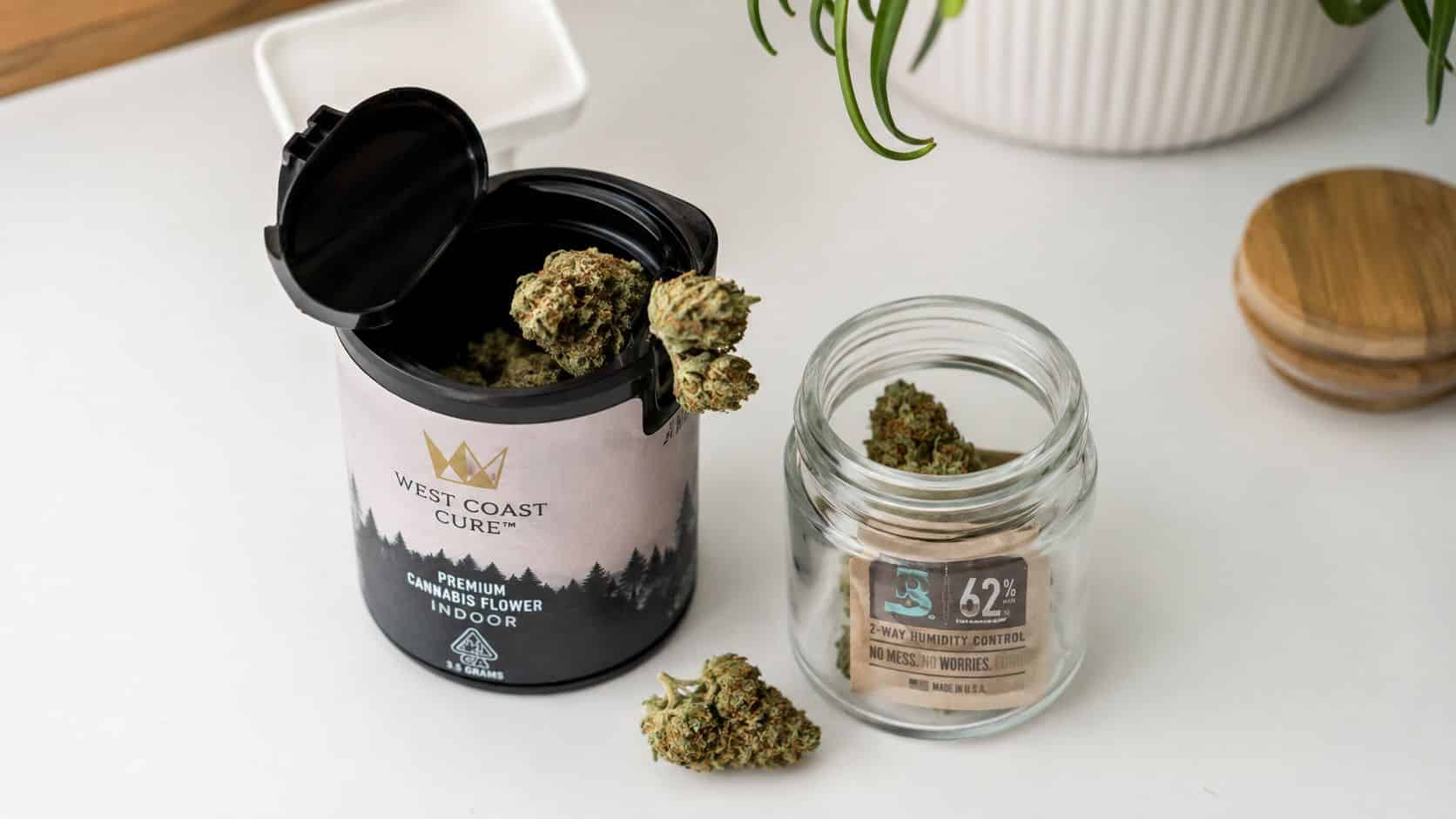
A major underserved angle is what to do when cannabis is bought in small, sealed retail containers and must stay fresh after opening. Existing guidance mostly repeats the same storage rules, airtight glass, darkness, cool temperatures, and humidity control, but it gives little practical help for people working with prepackaged eighths, mini-jars, or pop-top containers Green Rush News storage guide.
If you’ll finish the flower quickly, the original container may be good enough for the short run. If the package is going to sit around for days or weeks, move it into a better container. The deciding factor is consumption speed, not packaging aesthetics.
Repackage when the clock is longer than the use rate
For a small amount you plan to smoke soon, overcomplicating the process can backfire. People sometimes buy a humidity pack, a big jar, and extra accessories for flower that’s going to be gone in a few sessions. In that case, the retail container plus a dark, cool storage spot may be enough.
For slower use, repackage immediately into a smaller airtight glass jar. Less headspace means less oxygen. If you open the jar daily, split your flower into a “working” jar and a backup jar so you’re not exposing the whole stash each time.
If the package is small and you only open it once in a while, keep the original packaging intact until you actually need better storage.
Simple rules for common retail buys
- Prepackaged eighths: transfer to a smaller glass jar if you won’t finish it soon.
- Mini-jars: keep sealed, but move to a cooler, darker place once opened.
- Pop-tops: treat them as transport containers, not long-term storage.
- Daily-use flower: split off a small amount and leave the rest untouched.
If you want a clean place to browse menu categories, pickup options, and storage-friendly product choices, the store page is the kind of starting point that makes it easier to buy only what you can realistically keep fresh.
Common Storage Mistakes and How to Avoid Them
Most freshness loss doesn’t come from one huge mistake. It comes from a stack of little ones. A jar on the counter, a lid left loose, a pack that’s been dead for months, and suddenly good flower feels older than it should.
The habits that quietly ruin good cannabis
Opening the jar constantly is one of the fastest ways to degrade flower. Every opening lets in fresh oxygen and swings the humidity around, which is exactly what you don’t want. If you like to inspect your stash, do it less often.
Plastic bags and non-airtight containers are another weak point. They’re fine for moving product home, but they’re not built for preservation. Air exchange, static, and poor sealing all work against you Weedmaps storage guidance.
Heat and light also do obvious damage once you know what to look for. Sunlight on a windowsill, storage near an appliance, or a warm car glove box will age cannabis much faster than a dark cabinet ever will. The same storage guidance notes that opening flower often, using plastic bags, and storing near heat or light all accelerate oxidation and terpene volatilization Weedmaps storage guidance.
The mistakes people miss until the flower changes
A depleted humidity pack can fail without warning. It doesn’t always look broken, but it stops doing the job once it’s worn out. That’s why replacement matters, especially if the jar has been sitting for months.
Another common miss is using one oversized container for a small stash. The flower may still be sealed, but the extra air inside the jar keeps working against it. Smaller containers are usually better because they reduce headspace without adding much cost.
Quick audit for your current setup
- Seal check: does the lid close tightly every time?
- Location check: is the container away from light and heat?
- Humidity check: is the pack current, not ancient?
- Space check: is there a lot of empty room in the jar?
- Access check: are you opening it only when you need to?
If your answer is “no” to any of those, the fix is usually simple. Move the flower, downsize the jar, or replace the humidity pack before the quality falls off further. For practical product questions and fresh inventory handled by a licensed retailer, Flower Shak’s blog is a useful place to keep learning.
If you want fresh flower, pre-rolls, vapes, concentrates, or edibles picked and stored with care, visit Flower Shak and browse the menu before you buy. The staff can help you choose products that fit how fast you’ll use them, which makes freshness easier to protect from the start.